
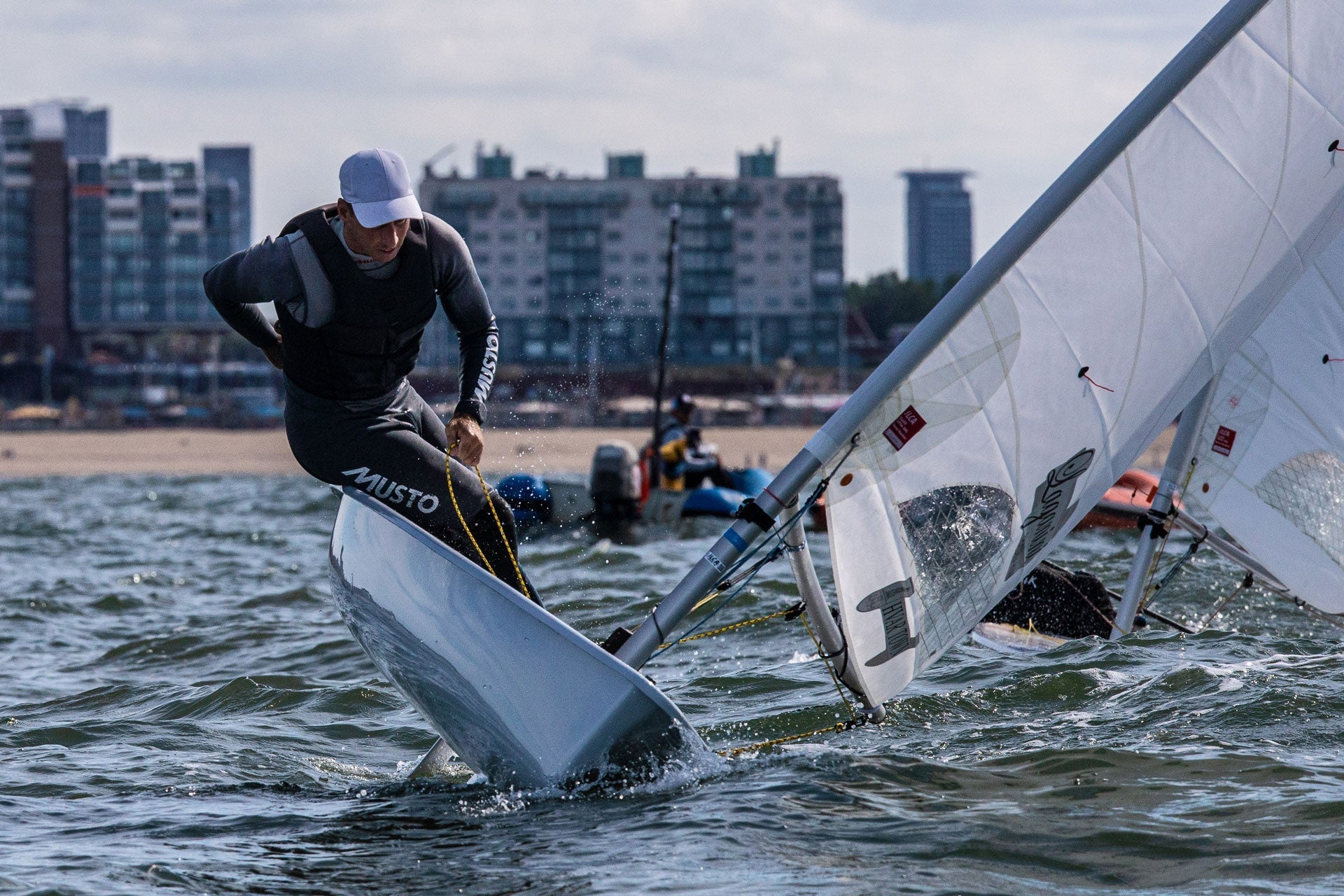
ILCA
Most popular one-handed sailing dinghy worldwide
All certified ILCA builders:
Compare the pricing, builders, boats and much more
Devoti
Devoti ILCA boats focus on robust construction and structural consistency, drawing on Olympic-class sailing experience. With a mainly direct sales model, dealer and after-sales support are limited, which helps keep pricing very competitive.

Element Six
Element 6 ILCA boats are built with careful laminate work and consistent production, giving a stiff and responsive feel on the water. The brand is known for precise construction and clean internal finish, contributing to reliable and lively sailing performance.
Ovington
Ovington ILCA boats are built with careful assembly and balanced weight distribution. On the water they are often described as neutral and controlled, offering a solid, predictable feel with good responsiveness across a wide range of conditions.

Far East boats
Fareast ILCA boats are built with precise laminate work and consistent production, giving a solid and responsive feel on the water. The company draws on decades of experience in high-performance dinghies, ensuring durable construction and smooth performance.

Nautivela
Nautivela brings decades of traditional dinghy-building experience to ILCA production. Their boats are commonly described as sturdy and dampened, prioritising strength over a more lively or lightweight sensation.
PSA
Performance Sailcraft Australia ILCA boats are built with robust laminate work and careful structural detail, producing a stable, predictable feel on the water. The company has a long history in dinghy production across Oceania.

PSJ
Performance Sailcraft Japan ILCA boats are built with careful laminate work and structural detail, producing a balanced and predictable feel on the water. The company draws on decades of experience producing dinghies.
Zim Sailing
Zim Sailing ILCA boats are produced with a practical and efficient construction approach, giving a well-balanced and forgiving feel on the water. Their focus on consistent assembly and structural detail contributes to smooth performance.
About ILCA
The ILCA (International Laser Class Association) manages the world-famous single-handed dinghy class, often called the Laser. ILCA boats are sailed in thousands of clubs worldwide and are used in local, national, and international competitions, including the Olympics. The class is known for being simple, fun, and highly competitive, offering a true test of sailing skill. ILCA also organizes events, promotes fair one-design racing, and supports a global community of sailors, from beginners discovering the sport to experienced racers chasing championships.
ILCA versus laser
The Laser dinghy, one of the most popular single-handed boats in the world, is now officially managed by the International Laser Class Association (ILCA). The name change started in 2020 to ensure standardized class rules, official governance, and a network of approved builders worldwide. Boats built before this change are still legal for racing if they meet ILCA specifications, and all new ILCA boats are fully approved and legal for all official competitions. Today, all ILCA races require boat builders to build boats conform to the class rules, ensuring fair one-design competition.
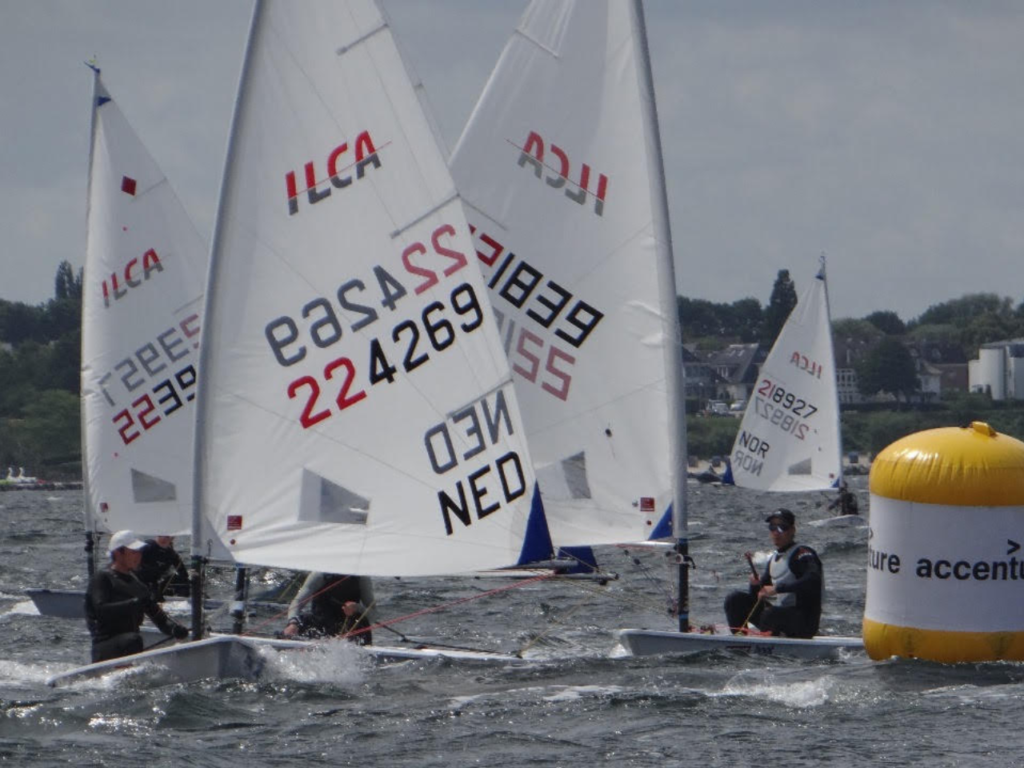
ILCA 4, 6 and 7 differences
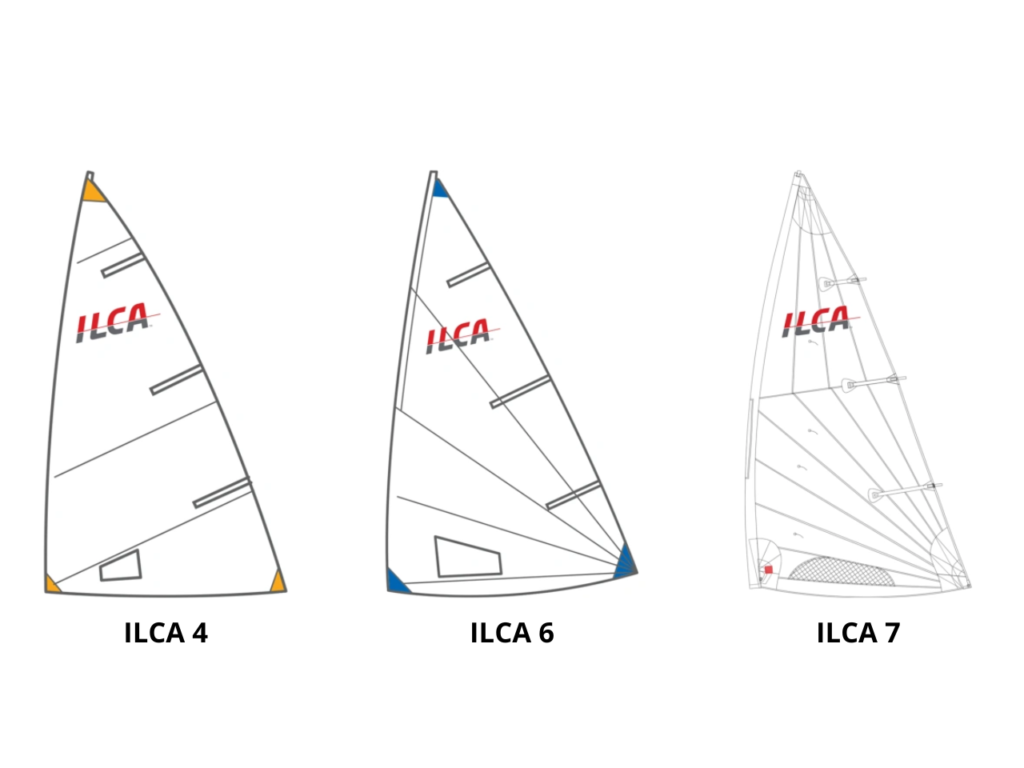
The ILCA 4, 6 and 7 share the same hull but have different rigs to suit various sailor weights and skill levels.
- ILCA 4: Smallest sail and shorter, pre-bent lower mast, ideal for lighter sailors and youth.
- ILCA 6: Medium sail with a more longer lower mast; carbon upgrade available to guarantee a stiff mast over time
- ILCA 7: Largest sail and even longer lower mast, built for heavier and more experienced sailors.
ILCA bottom masts
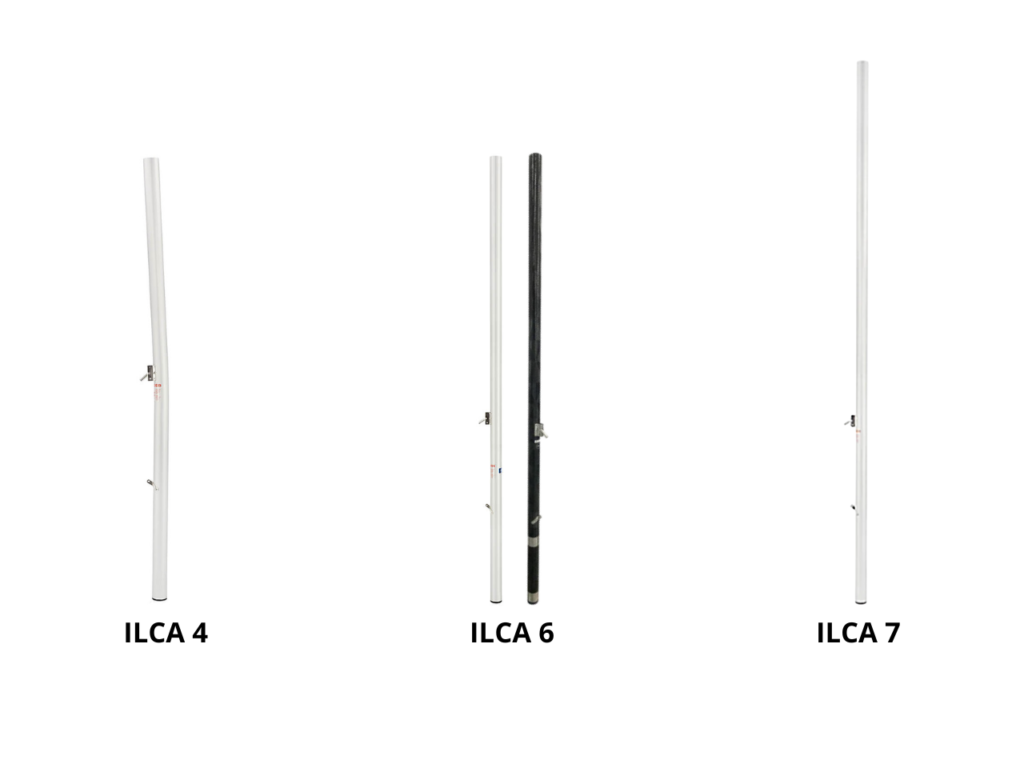
The ILCA 4, 6 and 7 use different lower mast sections to match their sail sizes and sailor weight ranges. The ILCA 4 has a shorter, pre-bent lower mast, the ILCA 6 a more flexible section, and the ILCA 7 a stiffer lower mast to handle higher loads.
For ILCA 6 sailors, a carbon lower mast upgrade is available. Compared to aluminium, carbon retains its stiffness better over time, providing more consistent and responsive performance, especially for competitive sailing.
Maintenance & tips
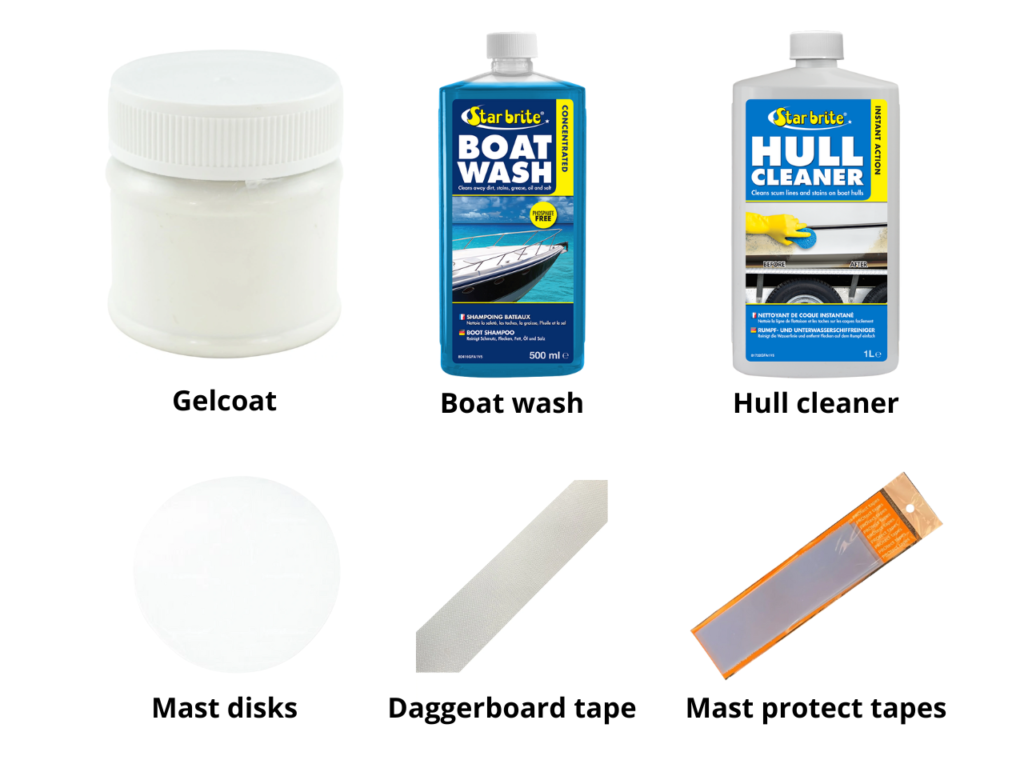
Proper maintenance keeps your ILCA performing at its best. Teflon mast disks reduce friction between the mast and mast step, allowing smoother rotation and preventing wear of your mast and mast step. Mast protection tapes help prevent wear of the mast step and lower mast.
Regular cleaning keeps the hull free from salt, dirt and oxidation, maintaining both appearance and performance. Applying daggerboard tape to the daggerboard can help reduce damage on your daggerboard case in the hull.
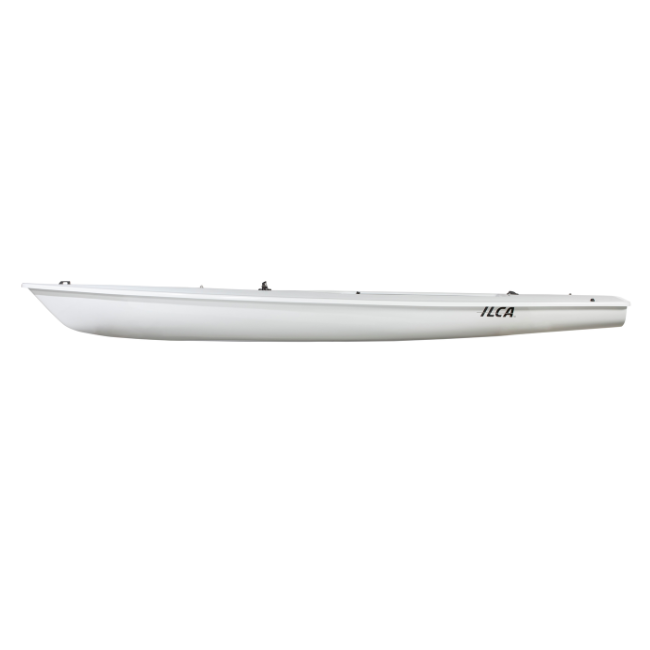
Specifications
| Length | 4.23 m |
|---|---|
| Beam | 1.20 m |
| Draft | 80 cm |
| Hull Weight | 57 kg |
| Hull Material | Polyester / Fiberglass |
| Crew | 1 person |
| Crew Weight | 30–110 kg |
| Recommended Age | 13–80 years |
| Sail | 4.7 m² (ILCA4) – 5.76 m² (ILCA6) – 7.06 m² (ILCA7) |
| Typical Use | Inland lakes, coastal waters, open sea (suitable conditions) |
| Experience Level | Beginner to advanced, depending on wind conditions |
| Designer | Bruce Kirby |
| Transport | Car roof or road base trailer |
Techincal specifications
| Upper mast | 300 cm |
| ILCA 4 lower mast | 2” H X 29.25” W X 12.5” D |
| ILCA 6 lower mast | 40” W X 20” D |
| ILCA 7 lower mast | 0.7” H |
| Boom | 39.6 lb. |
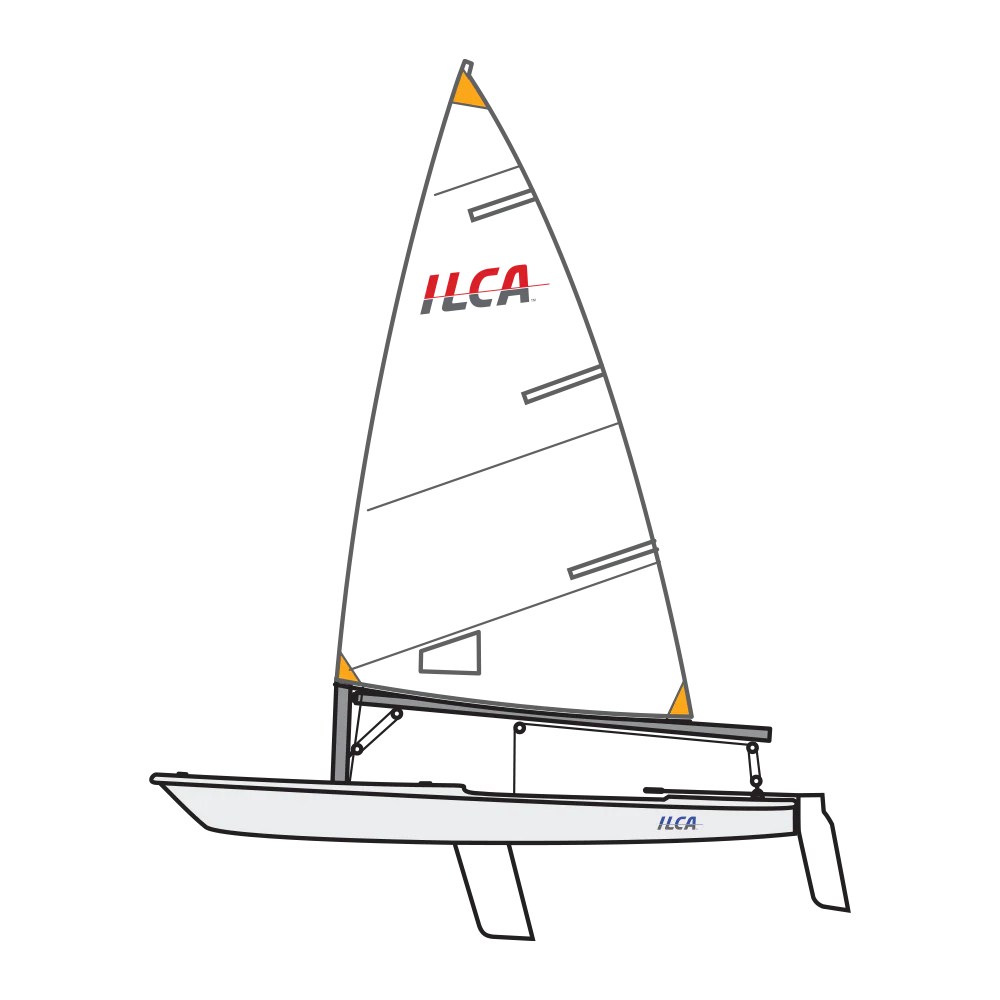
ILCA 4
- Sail area: 4.7 m²
- Rig: compared to the ILCA 7 and ILCA 6, fitted with a shorter and pre-bent lower mast section; boom and mast top are identical
- Recommended weight for youth: 35–58 kg
- Recommended age: 13+ years; body weight and physical condition are always decisive
- Age categories: Youth up to 18 years
- Formerly known as Laser 4.7
- Target group: sailors transitioning from the Optimist class, newcomers to dinghy sailing, as well as older Master sailors in stronger wind conditions
- Recognised as a youth development class in many sailing clubs
- Active in international and national regatta circuits, as well as club racing
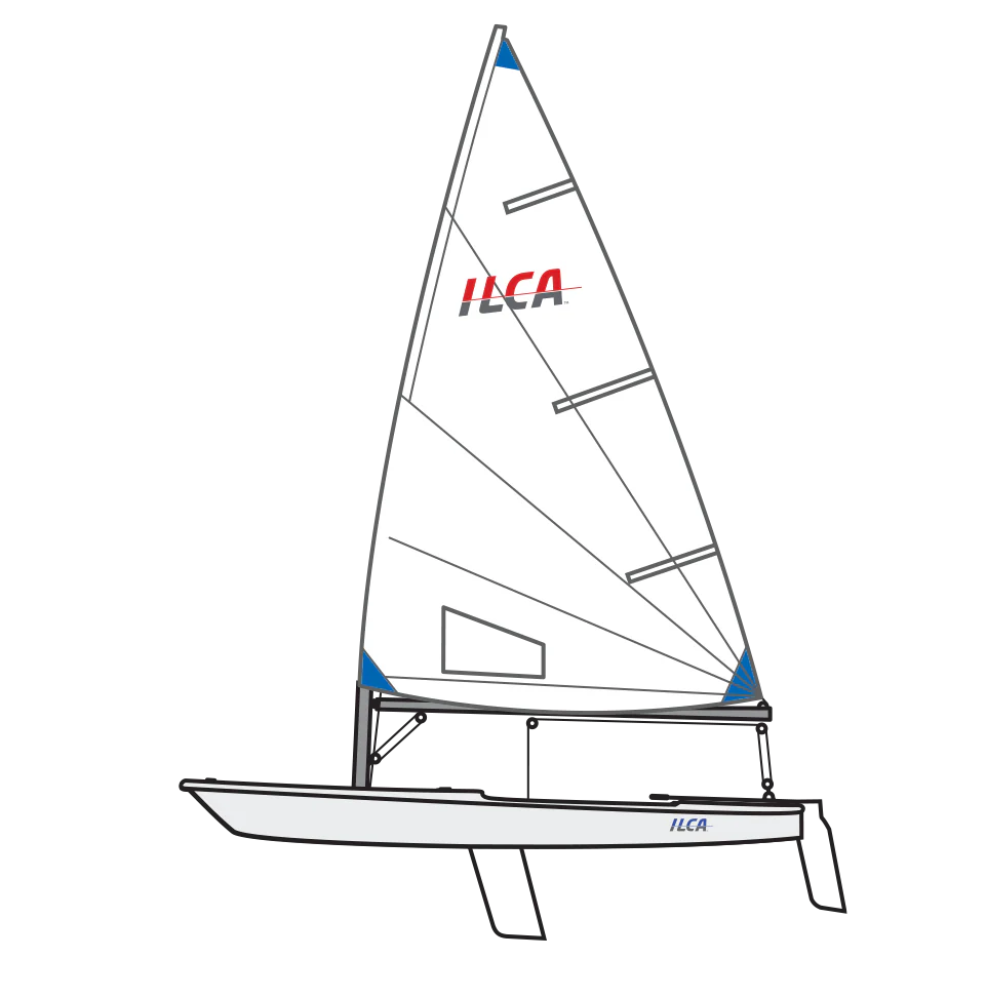
ILCA 6
- Sail area: 5.7 m²
- Rig: compared to the ILCA 7, fitted with a shorter and more flexible lower mast section; boom and mast top are identical
- Recommended weight for performance-oriented sailors: 65–74 kg
- Recommended weight for recreational sailors: from 58 kg upwards
- Recommended age: 15+ years; body weight and physical condition are always decisive
- Age categories: Youth up to 18 years, Juniors from 19 to 22 years, Masters from 30 years and above
- Olympic class for women since 2008
- Formerly known as Laser Radial
- Target group: performance-focused female sailors aiming for the Olympic Games, competitive male juniors preparing for the ILCA 7, and master sailors of all age categories
- Suitable for sailing instruction across all age groups
- Active in international and national regatta circuits, as well as club racing
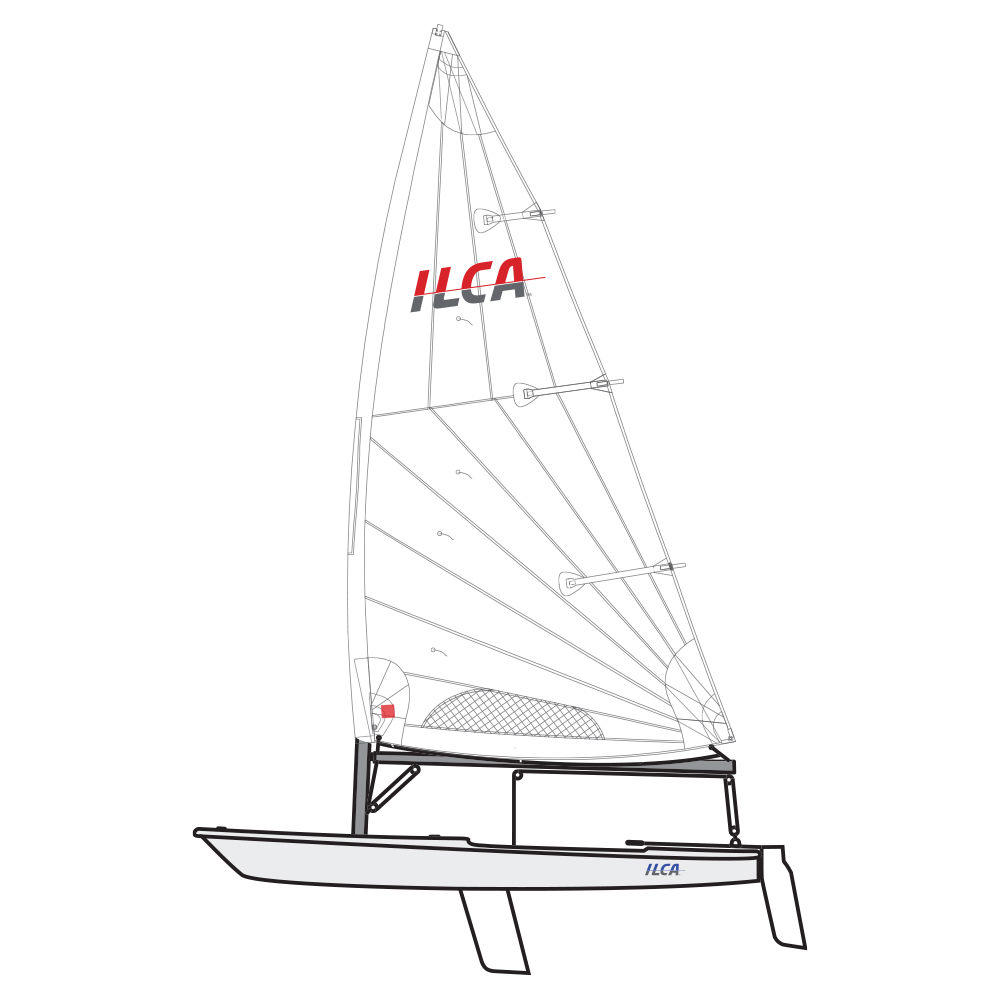
ILCA 7
- Sail area: 7.06 m²
- Recommended helmsman weight for high-performance racing: 80–88 kg
- Recommended helmsman weight for recreational racing: 70–100+ kg
Recommended age: 18+ years - Olympic class since 1996
Formerly known as Laser Standard
With the new rig featuring a composite top and bi-radial cut sail, significantly more body input and body weight are required compared to the Laser Standard - Target group: performance-oriented sailors aiming for the Olympic Games, committed regional Master sailors across various age categories from 30 years upwards, and recreational sailors who enjoy the powerful planing characteristics of the ILCA and sail it just for fun
- Active in international and national regatta circuits, as well as club racing